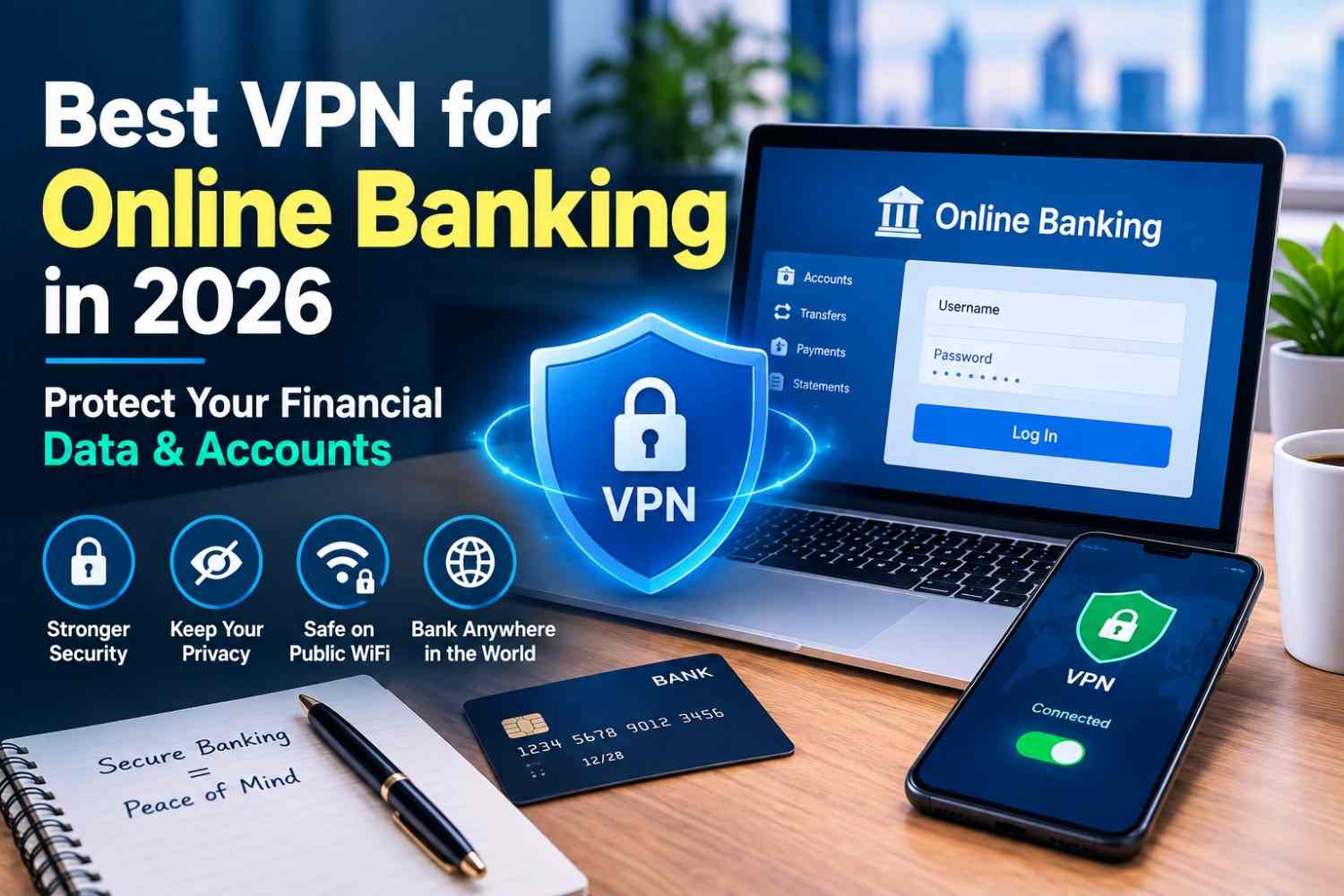
Online banking has become the default way most people manage their money, which also makes it one of the most sensitive things you do online. Logging into your bank from a hotel WiFi network or a coffee shop hotspot puts your credentials, balances, and transaction history within reach of anyone else on that same unsecured network. Picking the best VPN for online banking isn’t about generic privacy anymore. It’s about protecting the one account where a breach actually costs you money.
This guide covers the real risks of banking without protection, what to check before choosing a VPN for this specific use case, and which providers hold up when your finances are on the line.
Why Online Banking Needs Extra Protection
Banking apps and websites carry more risk than most everyday browsing, for a few clear reasons:
- Phishing and spoofing. Attackers on unsecured networks can redirect you to fake login pages designed to look identical to your real bank.
- Man-in-the-middle attacks. On public WiFi, someone on the same network can potentially intercept login credentials and session data.
- Credential theft. Once your banking login is compromised, the damage goes far beyond a single account.
- Fraud alerts and lockouts. Logging in from an unexpected location, even accidentally, can trigger security holds on your account.
What to Look For in the Best VPN for Online Banking
Banking specifically calls for a few features that matter less for casual browsing:
- Strong, proven encryption. AES-256 encryption should be non-negotiable, since this is the standard that protects financial data in transit.
- A dependable kill switch. If the VPN drops mid-session, your connection should cut immediately rather than silently fall back to an unprotected network.
- A stable home-country server. Using the same trusted server consistently reduces the chance of triggering fraud alerts from unexpected location changes.
- Full-tunnel mode, not split tunneling, for your banking app. Routing all traffic through the VPN during banking sessions avoids leaving gaps for that specific app.
- A verified no-logs policy. Independently audited providers give real assurance that your financial activity isn’t being tracked or stored.
- DNS and IP leak protection. Prevents your real location or ISP from leaking outside the encrypted tunnel during a banking session.
Best VPNs for Online Banking in 2026
Here’s how the top providers compare specifically for protecting financial accounts this year:
1. NordVPN
Combines NordLynx speed with RAM-only server infrastructure and thorough leak protection, plus an optional dedicated IP that helps banking apps recognize a consistent login source. Its kill switch is dependable across long sessions.
2. ExpressVPN
Known for strong encryption and reliable performance across devices, making it easy to bank securely whether you’re on a phone, tablet, or laptop. Its TrustedServer technology adds an extra layer of infrastructure security.
3. Proton VPN
A Swiss-based, audited no-logs policy backed by Secure Core architecture appeals to users who want maximum assurance that financial activity stays private.
4. Surfshark
A budget-friendly option that still covers core banking security needs, with unlimited device connections useful for checking accounts across multiple devices.
5. Private Internet Access (PIA)
Offers servers across many regions, including smaller ones, which can help avoid fraud flags when your usual bank branch or account is tied to a specific area.
Best Practices for Banking Safely With a VPN
A VPN helps most when paired with a few consistent habits:
- Pick one or two home-country servers and stick with them for banking, rather than switching locations frequently.
- Use full-tunnel mode for your banking app or browser instead of excluding it through split tunneling.
- Avoid free VPNs for banking specifically, since shared or abused IP ranges are more likely to trigger fraud alerts.
- Always double-check you’re on your bank’s real login page, since a VPN doesn’t protect against phishing links.
Frequently Asked Questions
Will a VPN cause my bank to flag my account? It can, if you frequently switch server locations. Sticking to a consistent home-country server usually avoids this issue.
Is a free VPN safe enough for online banking? Generally no. Free VPNs often share IP addresses across many users, which increases both fraud-alert risk and, in some cases, actual privacy risk.
Do I still need a VPN if my bank’s app is already encrypted? Yes. Your bank encrypts its own connection, but a VPN adds a separate layer of protection for the rest of your network traffic and hides your activity from others on the same network.
Final Thoughts
Your bank account is one of the few places online where a security lapse has an immediate financial cost, which makes it worth getting the VPN choice right. The best VPN for online banking combines strong encryption, a reliable kill switch, and a consistent, trusted server, so you can check balances and move money without worrying about who else might be watching.

Leave A Comment